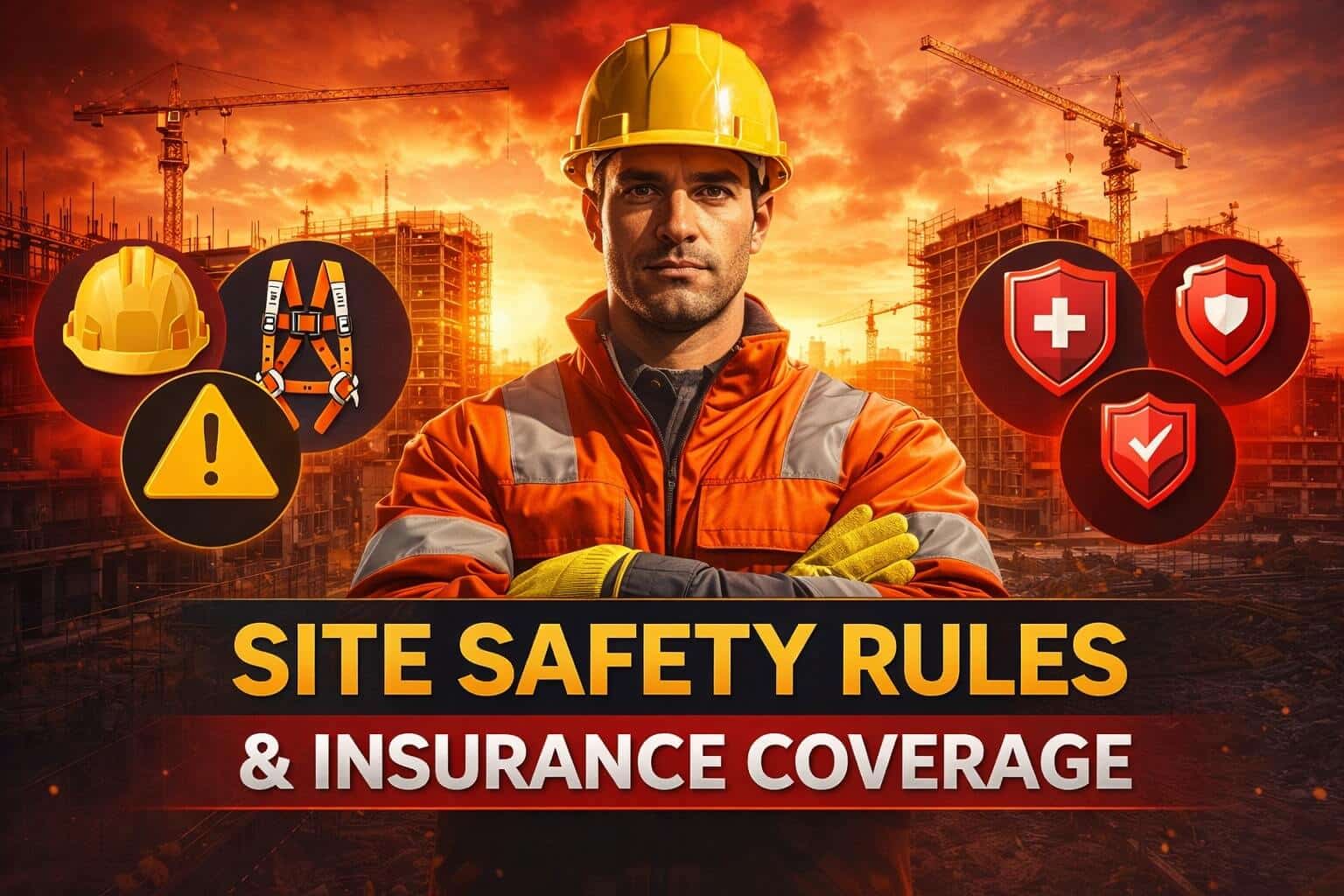
Site Safety Rules and Insurance Coverage: A Complete Guide for Safer Worksites
Site Safety Rules and Insurance Coverage: A Complete Guide for Safer Worksites
Construction and industrial worksites are among the most high-risk environments in any industry. Every day, workers face hazards such as heavy machinery, working at heights, electrical equipment, and moving vehicles. While productivity and deadlines are important, site safety rules and proper insurance coverage are critical for protecting lives, businesses, and projects.
This article explains why site safety rules matter, how they reduce accidents, and how insurance coverage supports both workers and employers when unexpected incidents occur.
Why Site Safety Rules Are Important
Site safety rules are designed to prevent accidents, injuries, and loss of life. A single safety lapse can result in serious injury, project delays, legal trouble, and financial losses.
Following safety rules helps:
- Protect workers from injuries and fatalities
- Reduce downtime and project delays
- Improve morale and confidence among workers
- Ensure legal and regulatory compliance
- Lower insurance claims and costs
A safe site is not only a legal requirement but also a sign of a professional and responsible organization.
Common Hazards at Worksites
Understanding risks is the first step toward safety. Common site hazards include:
- Falls from height due to unprotected edges or scaffolding
- Injuries from heavy machinery and tools
- Electrical shocks from exposed wiring
- Slips and trips caused by poor housekeeping
- Fire hazards and chemical exposure
Most site accidents occur due to unsafe practices, lack of training, or ignoring safety rules.
Essential Site Safety Rules Every Worksite Should Follow
1. Use of Personal Protective Equipment (PPE)
Wearing proper PPE is mandatory on any worksite. This includes:
- Safety helmets
- High-visibility jackets
- Safety shoes
- Gloves and eye protection
PPE acts as the first line of defense against injuries.
2. Safety Training and Induction
All workers should undergo safety induction before starting work. Regular training sessions help workers:
- Understand site risks
- Learn safe working procedures
- Use equipment correctly
Well-trained workers are less likely to cause or suffer accidents.
3. Proper Scaffolding and Fall Protection
Working at height is one of the leading causes of site accidents. Safety rules require:
- Strong and inspected scaffolding
- Guardrails and safety nets
- Full-body harnesses
Fall protection systems save lives when accidents occur.
4. Electrical Safety Measures
Electrical hazards can be fatal. Safety rules include:
- Proper earthing
- Insulated tools
- Lock-out and tag-out procedures
- Regular inspection of cables and panels
Only authorized personnel should handle electrical work.
5. Machinery and Equipment Safety
Heavy equipment should be:
- Operated by trained personnel
- Inspected regularly
- Maintained properly
Unsafe machinery is a major cause of serious injuries on sites.
6. Housekeeping and Site Cleanliness
Clean worksites reduce slips, trips, and falls. Materials should be stored properly, and waste should be removed regularly.
Role of Supervision and Safety Officers
Safety officers ensure that rules are followed daily. Their responsibilities include:
- Monitoring site activities
- Conducting safety audits
- Reporting unsafe conditions
- Ensuring compliance with safety standards
Strong supervision improves overall site safety culture.
What Is Insurance Coverage in Site Safety?
Even with strict safety rules, accidents can still happen. Insurance coverage acts as a financial safety net when incidents occur.
Insurance protects:
- Workers and their families
- Contractors and employers
- Project owners
It ensures that medical expenses, compensation, and legal liabilities are handled smoothly.
Types of Insurance Coverage for Worksites
1. Workmen Compensation Insurance
This insurance covers workers in case of:
- Injury
- Disability
- Death due to workplace accidents
It is mandatory for most construction and industrial projects.
2. Contractor’s All Risk (CAR) Insurance
CAR insurance covers:
- Damage to construction works
- Equipment and materials
- Third-party property damage
It protects projects from unexpected losses.
3. Group Personal Accident Insurance
This policy provides fixed compensation in case of accidental death or disability of workers and staff.
4. Third-Party Liability Insurance
This insurance covers injury or damage caused to third parties due to site activities.
5. Medical Insurance for Workers
Some employers provide medical or health insurance to cover hospitalization and treatment expenses.
How Safety Rules and Insurance Work Together
Safety rules reduce the chances of accidents, while insurance manages the financial impact when accidents occur. Together, they:
- Protect human lives
- Minimize financial losses
- Ensure project continuity
- Reduce legal complications
Insurance is not a replacement for safety—it is a backup plan.
Benefits of Strong Safety and Insurance Practices
- Lower accident rates
- Faster claim settlements
- Improved worker confidence
- Better company reputation
- Compliance with legal requirements
Clients and authorities prefer contractors with strong safety and insurance systems.
Common Mistakes Companies Make
- Ignoring safety training
- Using expired or insufficient insurance policies
- Not reporting incidents on time
- Treating safety as a formality
Avoiding these mistakes can save lives and money.
Conclusion
Site safety rules and insurance coverage are two pillars of responsible project management. Safety rules prevent accidents, while insurance coverage provides financial protection when things go wrong. Together, they create a secure and professional work environment.
Also Read:
Accident Insurance for Construction Workers: Benefits, Coverage & Claim Process
Health Insurance for Private Employees: Why It Matters and How to Choose the Right Plan