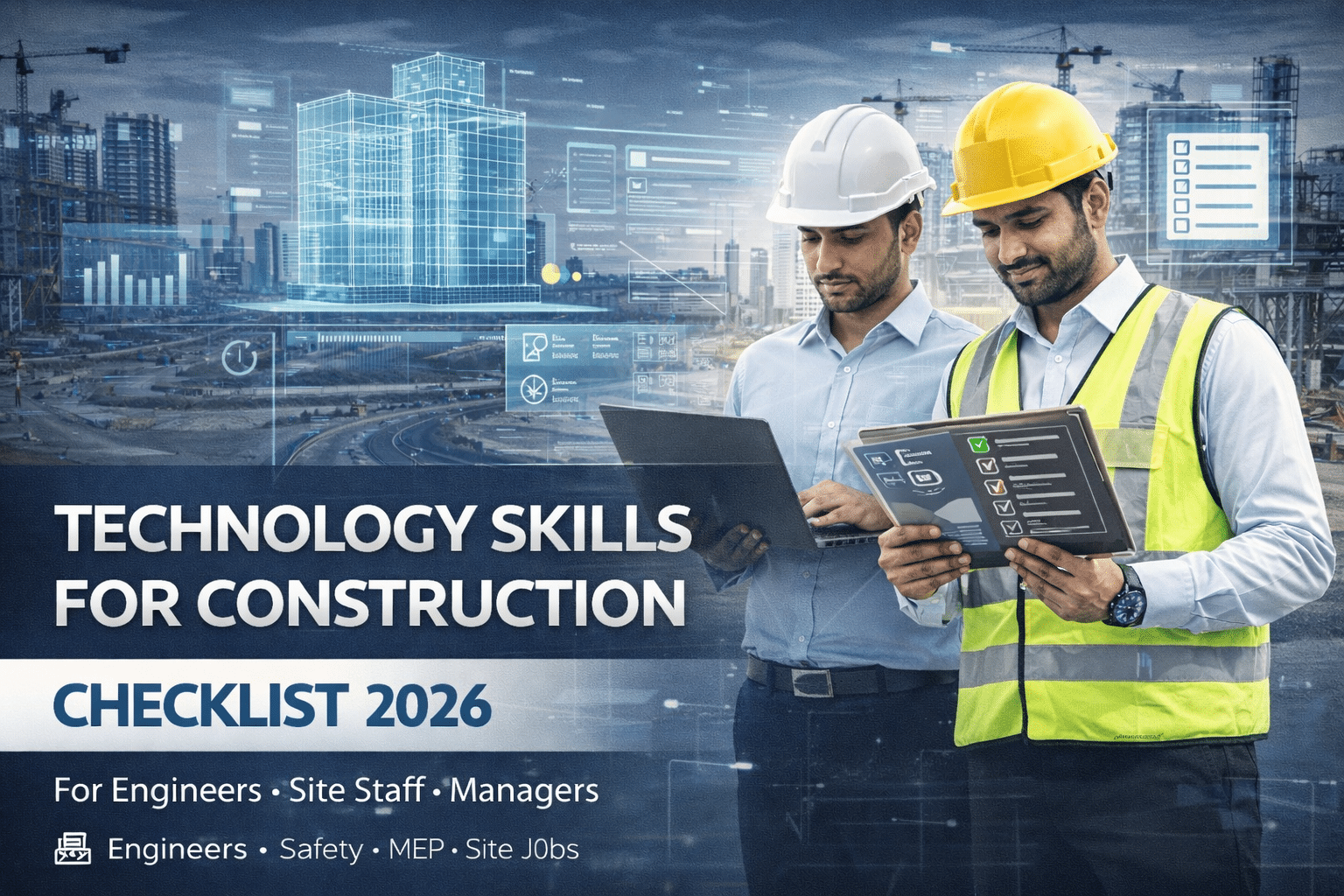
Technology Skills Checklist for Construction: A Practical Guide for Modern Professionals
The construction industry is no longer driven only by manual labor and traditional methods. Technology has become a core part of how construction projects are planned, executed, and delivered. From small residential projects to large infrastructure developments, digital tools are improving accuracy, speed, safety, and cost control.

For engineers, supervisors, contractors, and project managers, keeping up with technology is no longer optional. This technology skills checklist for construction helps professionals understand the essential digital skills required to succeed in today’s construction environment.
Why Technology Skills Matter in Construction
Construction projects involve multiple teams, tight deadlines, and high financial risk. Technology helps simplify complex processes and reduce human error.
Strong technology skills help construction professionals:
- Improve project planning and coordination
- Track progress in real time
- Control costs and reduce wastage
- Enhance site safety and quality
- Communicate effectively between site and office
Companies now prefer professionals who can combine technical knowledge with digital skills.
Core Digital Skills Every Construction Professional Should Have
Before moving into advanced tools, every construction professional should be comfortable with basic digital skills.
1. Computer and Mobile Device Proficiency
- Using laptops, tablets, and smartphones efficiently
- Managing emails and cloud storage
- Working with digital files and folders
Most site reporting and communication now happen through mobile devices.
2. Spreadsheet and Documentation Skills
- Using spreadsheets for tracking quantities, costs, and manpower
- Preparing simple reports and summaries
- Understanding basic formulas and data entry
Spreadsheets remain widely used across construction projects.
Construction Project Management Technology Skills
3. Construction Management Software
Knowledge of construction management platforms helps professionals track projects efficiently.
Key skills include:
- Project scheduling
- Task tracking
- Budget monitoring
- Document sharing
These tools help keep all stakeholders aligned.
4. Scheduling and Planning Tools
Planning tools help manage timelines and resources.
Important skills:
- Creating project schedules
- Updating progress regularly
- Identifying delays and risks
Understanding planning software improves project control and decision-making.
Design and Engineering Technology Skills
5. CAD and Drafting Software
Computer-Aided Design (CAD) tools are essential for reading and understanding drawings.
Key abilities:
- Reading digital drawings
- Basic editing and markup
- Understanding layers and dimensions
Even site engineers benefit from basic CAD knowledge.
6. Building Information Modeling (BIM) Awareness
BIM is increasingly used in large projects.
Important concepts include:
- 3D model coordination
- Clash detection
- Data-based project visualization
While not everyone needs to be a BIM expert, understanding BIM improves coordination.
Site Execution and Monitoring Technology Skills
7. Digital Site Reporting
Digital reporting tools replace handwritten site registers.
Skills include:
- Daily progress reporting
- Photo documentation
- Material and manpower tracking
This improves transparency and accountability.
8. Use of Drones and Site Monitoring Tools
Drones and remote monitoring tools are becoming common on large sites.
Basic understanding helps with:
- Progress tracking
- Site inspections
- Safety monitoring
Technology-driven monitoring saves time and improves accuracy.
Cost Control and Commercial Technology Skills
9. Estimation and Quantity Take-Off Tools
Digital estimation tools improve accuracy and speed.
Key skills:
- Quantity measurement from drawings
- Cost estimation
- Budget comparison
These tools are valuable for billing and commercial roles.
10. Accounting and Billing Software
Understanding billing and accounting software helps manage project finances.
Important areas:
- Contractor billing
- Expense tracking
- Financial reporting
Commercial awareness improves project profitability.
Safety and Quality Technology Skills
11. Digital Safety Management Systems
Technology plays a major role in improving site safety.
Skills include:
- Reporting safety incidents digitally
- Conducting safety checklists
- Monitoring compliance
Digital safety systems help reduce accidents.
12. Quality Control and Inspection Tools
Quality inspections are now managed through apps and software.
Key uses:
- Inspection checklists
- Non-conformance reporting
- Quality documentation
Digital tools make quality control more systematic.
Communication and Collaboration Skills
13. Online Communication Platforms
Construction teams use digital platforms for coordination.
Skills include:
- Online meetings
- File sharing
- Real-time updates
Strong digital communication reduces misunderstandings.
14. Cloud-Based Document Management
Cloud storage is widely used for drawings, reports, and approvals.
Professionals should know:
- Uploading and sharing files
- Version control
- Access management
This ensures everyone works with updated information.
Data and Reporting Skills
15. Basic Data Analysis and Dashboards
Understanding project data helps in better decision-making.
Important skills:
- Reading dashboards
- Understanding progress charts
- Identifying trends and risks
Data-driven decisions improve project outcomes.
Cybersecurity and Data Safety Awareness
16. Basic Cybersecurity Knowledge
As construction becomes digital, data security is important.
Professionals should:
- Protect login credentials
- Avoid unverified software
- Understand data privacy basics
Secure systems protect project information.
Adaptability and Continuous Learning
17. Willingness to Learn New Tools
Technology evolves quickly in construction.
Key mindset skills:
- Openness to change
- Willingness to learn
- Continuous skill upgrading
Adaptability is one of the most valuable skills today.
How to Build Technology Skills in Construction
- Attend online and offline training programs
- Learn through real project usage
- Practice tools on small tasks
- Follow industry updates and trends
Even basic knowledge can make a big difference in daily work.
Benefits of Strong Technology Skills
Construction professionals with strong digital skills enjoy:
- Better job opportunities
- Higher efficiency and productivity
- Improved career growth
- Strong professional reputation
Technology skills add long-term value to any construction career.
The construction industry is changing rapidly, and technology is at the center of this transformation. This technology skills checklist for construction highlights the essential digital abilities required to succeed in modern projects.
Also Read:
Best Construction Jobs in the Gulf for Indians in 2026: Complete Career Guide
Best Construction Management Software in India: A Practical Guide for Builders and Contractors